
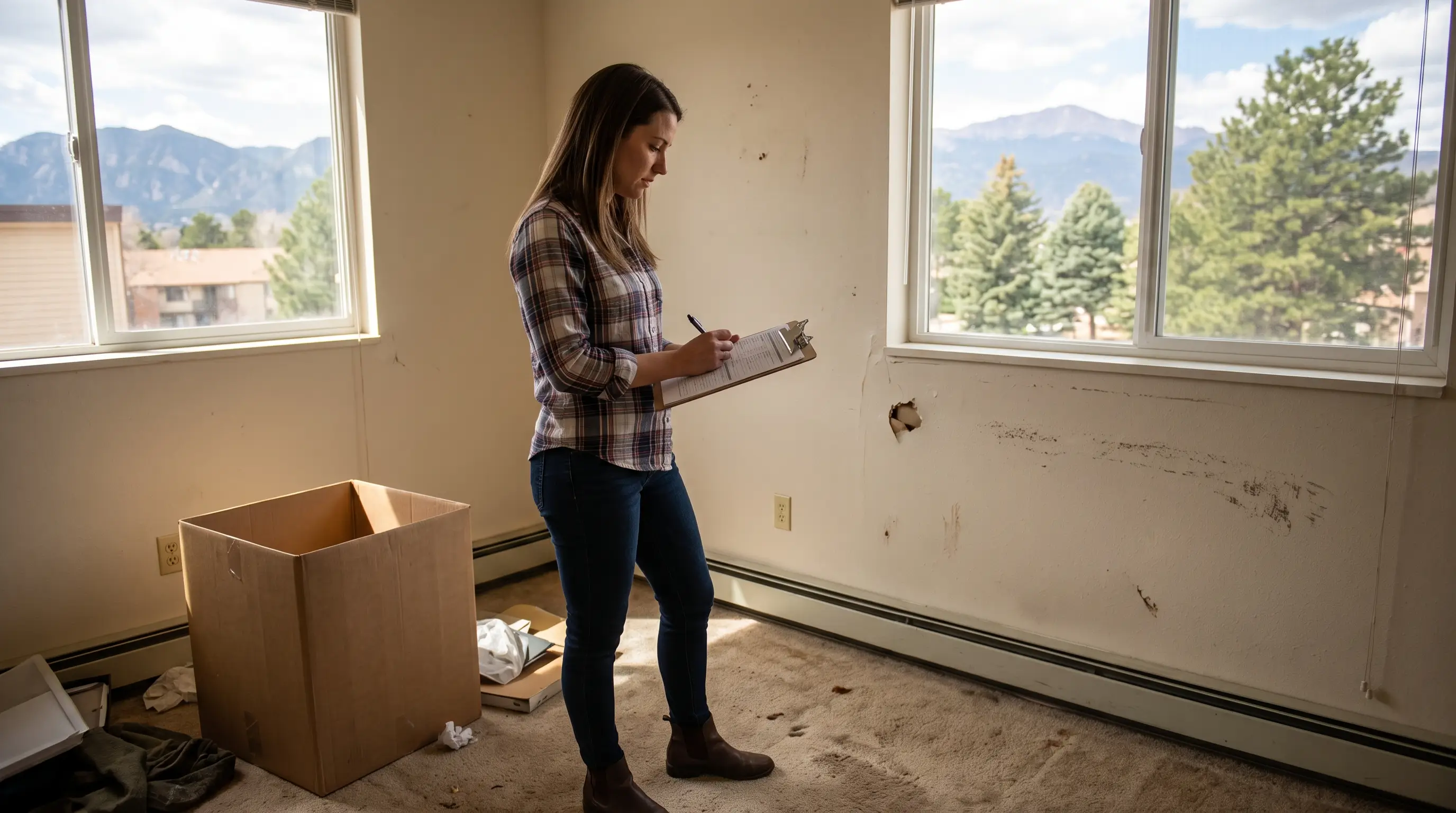
Imagine doing everything right after a tenant trashes your Denver rental, only to owe them money in court.
Under HB25-1249, Colorado presumes bad faith when a landlord keeps 125% or more of the actual damages incurred. Wrongful retention exposes the landlord to treble damages, and attorney's fees can follow.
That changes the math on tenant property damage. A broken window still needs fixing. A ruined carpet still needs replacing. The difference is that recovering repair costs now depends on strict timelines and proper documentation. Most landlords who lose deposit disputes lose them on paperwork, not on the damage.
This post walks you through Colorado's updated deposit rules and the steps property managers take to protect landlords from costly disputes.
Key Takeaways
- Colorado's updated deposit law took effect January 1, 2026, and expands what counts as normal wear and tear.
- Landlords must return deposits with an itemized statement within 30 days, or up to 60 if the lease allows.
- Keeping 125% or more of actual damages creates a presumption of bad faith and exposure to treble damages.
- Move-in photos and pre-move-out walk-throughs give landlords the evidence to defend every deduction.
What Colorado's 2026 Deposit Law Changed for Landlords
Did You Know?
Colorado law actually defines "normal wear and tear." The definition already existed, but HB25-1249 updated it to include damage and uncleanliness that result from reasonable, typical use.
HB25-1249 took effect on January 1, 2026. Here are the changes that matter most when a tenant leaves damage behind.
Normal Wear and Tear Now Covers Some Damage and Dirt
Colorado now counts some damage and uncleanliness from typical use as normal wear and tear. Landlords cannot charge tenants for it. Lease clauses that charge for normal wear or pre-existing problems are void.
Deposits Are Due Back Within 30 Days
The clock starts when the tenant moves out. The default deadline is thirty days, and a lease can extend it to sixty at most. Owners with multiple properties often slip here when move-outs overlap.
Some guides claim the maximum security deposit dropped to one month's rent in 2026. Colorado's legislature still lists the cap as two months' rent payments.
Missing a Step Wipes Out the Right to Deduct
This is where many landlords get caught. If a landlord fails to follow the statute, the right to withhold any part of the tenant's security deposit disappears. In court, the landlord bears the burden of proof. Every dollar kept must have a valid reason and supporting evidence.
Where Tenant Damage Ends and Wear and Tear Begins
This line decides every deduction. Normal wear comes from everyday living, while tenant-caused damage comes from negligence, accidents, or abuse. Here are the distinctions experienced property managers rely on.
Tenant damage landlords can charge for:
- Holes punched or gouged into walls
- Broken windows or damaged exterior doors
- Pet urine stains and torn carpet
- Burns on countertops or cabinets
Normal wear and tear landlords cannot charge for:
- Small nail holes from hanging pictures
- Faded or lightly scuffed paint
- Worn carpet paths in high traffic areas
- Loose door handles from regular use
Cleaning falls in between. Charges hold up only when the unit is substantially less clean than at move-in. Painting walls after a routine tenancy typically falls on the owner.
Fair housing laws add one more wrinkle. Landlords cannot charge pet deposits for service animals or emotional support animals, though tenants remain responsible for actual damage those animals cause.
How Property Managers in Colorado Protect Owners Against Tenant Damage
Strong records turn a damage claim into a clear, defensible deduction. Here are the safeguards professional property management puts in place.
Detailed Move-In Reports Lock In the Baseline
Move-in inspections with date-stamped photos set the starting point. Signed checklists record the property condition before the tenant unpacks. Without them, every old scuff becomes the owner's problem.
Routine Inspections Catch Damage Early
Mid-lease visits with reasonable notice spot leaks and hidden pet damage before they grow. They also support landlords' obligations under Colorado's implied warranty of habitability, which keeps a rental unit fit for human habitation, including its electrical systems. Clear records separate necessary repairs from tenant damage. That matters when a repair request turns into a threat to withhold rent.
Pre-Move-Out Walk-Throughs Give Tenants a Chance to Fix Problems
Either party may request a walk-through before the lease ends, after furniture is out. It can happen in person or by video. Tenants who fix issues early leave fewer disputes behind.
Itemized Statements Tie Every Deduction to Proof and Real Costs
The written notice to the tenant should leave nothing to guess. A strong statement includes:
- The exact reason for each deduction
- Move-in and move-out photos side by side
- Repair invoices or contractor estimates
- The refund amount and payment date
Altara Property Management documents every Denver move-in and move-out with detailed, photo-backed inspection reports. Schedule a property consultation and see how our records protect your deposits.
Watch Out!
Even honest mistakes can count against owners. The law also treats it as bad faith when a landlord knew, or should have known, that the amount kept exceeded actual damages. Real invoices protect against this.
Ways Colorado Property Managers Limit and Recover Damage Costs
Prevention and recovery work together. Here are the safeguards that keep repair bills off the owner's desk:
- Thorough tenant screening: Rental history and landlord references show how applicants treat a home. Consistent criteria keep screening fair housing compliant.
- Compliant lease agreements: A solid lease defines tenant responsibilities and respects local ordinances on occupancy limits. It should also reflect Colorado's 2025 protections for survivors of domestic abuse.
- Renters insurance requirements: A renters policy shifts some risk to the tenant. A landlord policy covers larger losses.
- Small claims court: You can take damage beyond the deposit to small claims court. Serious lease violations may also open the eviction process with proper notice.
Raising rent to recoup losses also has limits. Colorado bans rent control, but landlords may raise rent only once every 12 months per tenant. Either way, proper documentation decides the outcome.
Frequently Asked Questions
Q: Who pays for damage caused by a tenant's guests?
The tenant does. Colorado's definition of wear and tear excludes negligence or abuse by the tenant's guests and invitees.
Q: What happens to a deposit when a Colorado rental is sold mid-lease?
The landlord or agent has sixty days to transfer the funds to the new owner and notify the tenant by mail. The other option is returning the funds after lawful deductions.
Q: Can Colorado landlords collect a separate pet deposit?
Yes, within limits. Colorado caps an additional pet deposit at $300.
Protecting a Colorado Rental Starts Long Before Move-Out
Colorado landlord-tenant laws now reward preparation and punish shortcuts. Owners who document early keep more of what they are owed. Owners who wait until move-out often lose the deposit argument and end up paying extra.
Remember those holes in the drywall? With the right records, they become a clean, defensible deduction instead of a lawsuit. That protection comes from habits built throughout the lease term, not a last-minute scramble.
Altara Property Management handles Colorado deposit compliance from lease signing through final refund for Denver property owners. Let's discuss how to keep your investment protected under the 2026 rules.